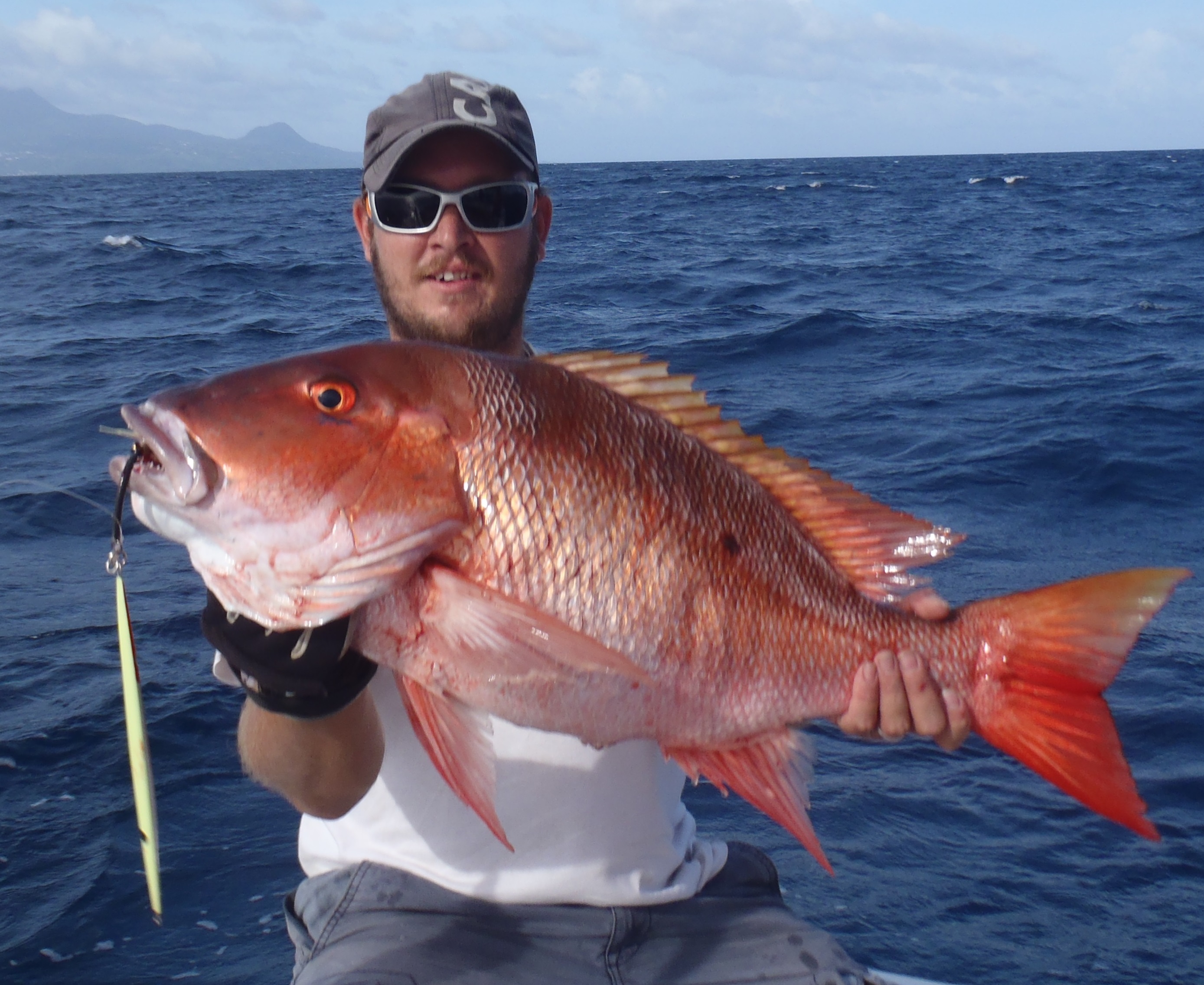

Kingfish, Cero and Mackerel

These toothy predators inhabit the coastal zone. We encounter three species: kingfish, cero and, less frequently, Spanish mackerel.
Kingfish are the most common and grow the largest: they are something of a local counterpart to dogtooth tuna.
Cero and Spanish mackerel are smaller, generally prefer shallower water and can be distinguished by the markings on their sides.

Spanish mackerel have spots, while cero also have elongated markings along the lateral line.
Like their offshore cousin, the wahoo, they have razor-sharp teeth and can destroy tackle. When jigging the drop-offs, they account for many cut leaders. Sometimes we have to move because we lose so many jigs; the boat’s record is 37 in one day!

We use heavier leaders to reduce bite-offs and wire assist hooks. For example, an outfit with 50 lb braid may use an 80 lb fluorocarbon leader, which can make a snag on the bottom difficult to break free.
They can be caught by coastal trolling, but jigs and micro-jigs account for many of our catches. In water up to around 40 metres, we use light jigging and micro-jigs. Heavier jigs reach the deeper drop-offs, where kingfish are the main species encountered.
Catches from guided trips
Click a photo to open the slideshow.


