
Jacks and Trevallies

Jacks and trevallies are highly prized by sport anglers for their impressive fighting power. The best-known is the giant trevally, or GT, which grows particularly large. It does not occur in Guadeloupe.
We regularly catch many other jack species, in various sizes, around drop-offs and rocky banks at different distances from the coast.

These attractive, often rounded fish have relatively small mouths, fleshy lips and small teeth. They fight hard, turning their flanks into the current to resist the angler.
The rear part of the lateral line has sharp bony scutes that can cut hands. Gloves help when handling fish near the tail.

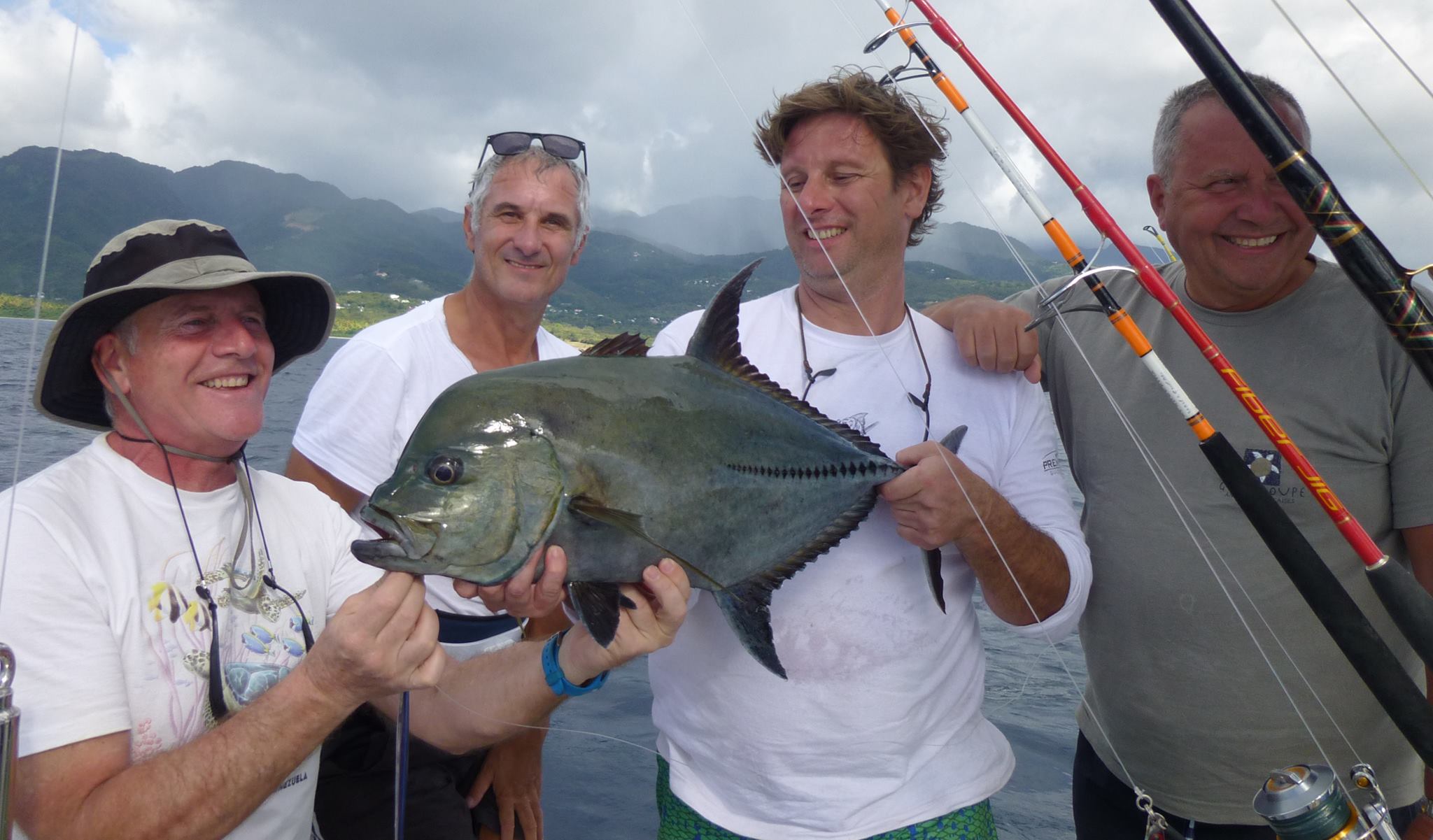
Black jacks, with dark grey bodies and black fins, are common and remarkably powerful for their size. We mainly catch them on jigs along deeper drop-offs from around 80 metres.
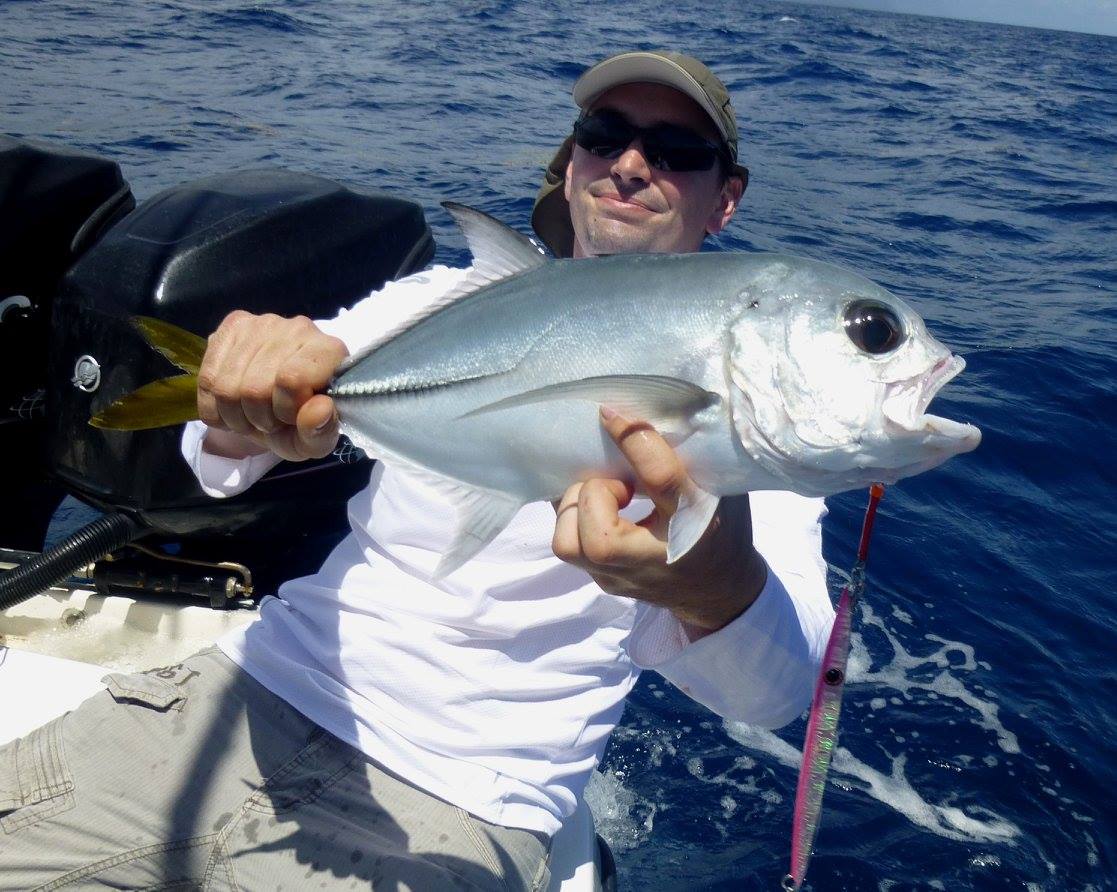
Bigeye jacks are also common, often near the tops of drop-offs around 50 metres. Their large eyes and silvery flanks are distinctive. Jigs and inchiku work well.

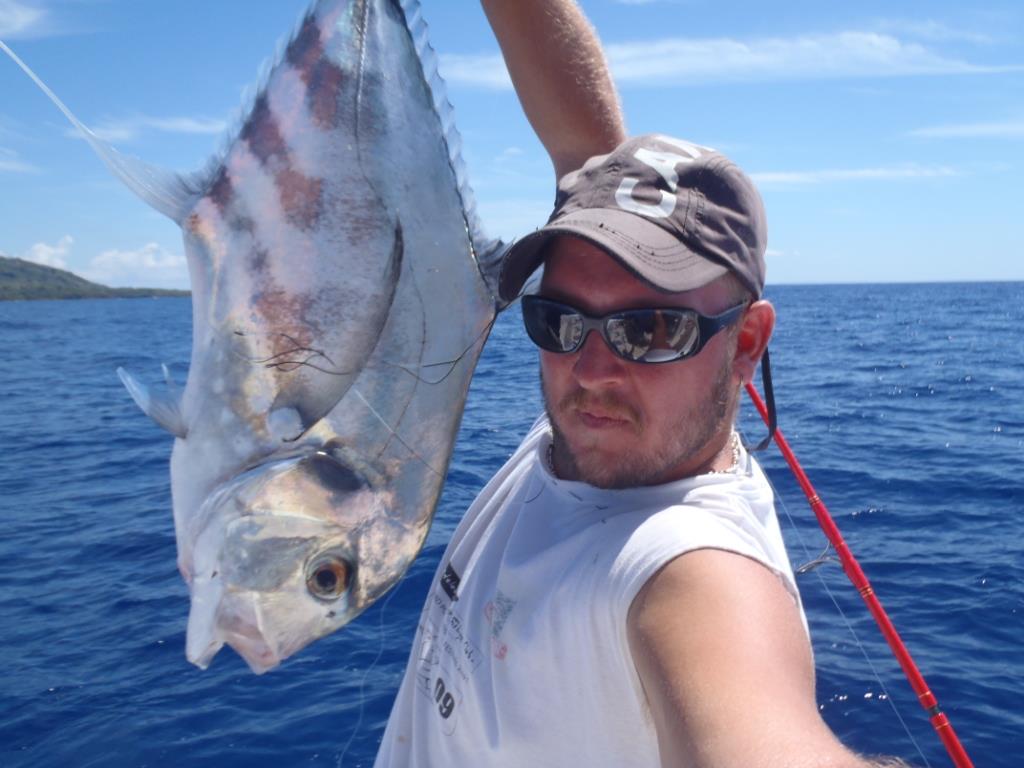
The less common African pompano, known locally as “carangue à plume”, is one of my favourites. Usually found in shallower water down to around 50 metres, it is silver with long, delicate dorsal and anal fin filaments. It takes jigs, madai, inchiku and soft plastics.
Other local names include “carangue inox”, “carangue jaune”, “carangue hippos”, “carangue bleue” and “carangue lune”; permit also add to the variety. There is plenty of diversity to discover.
Catching a jack is always an adventure, especially on light tackle.
Catches from guided trips
Click a photo to open the slideshow.